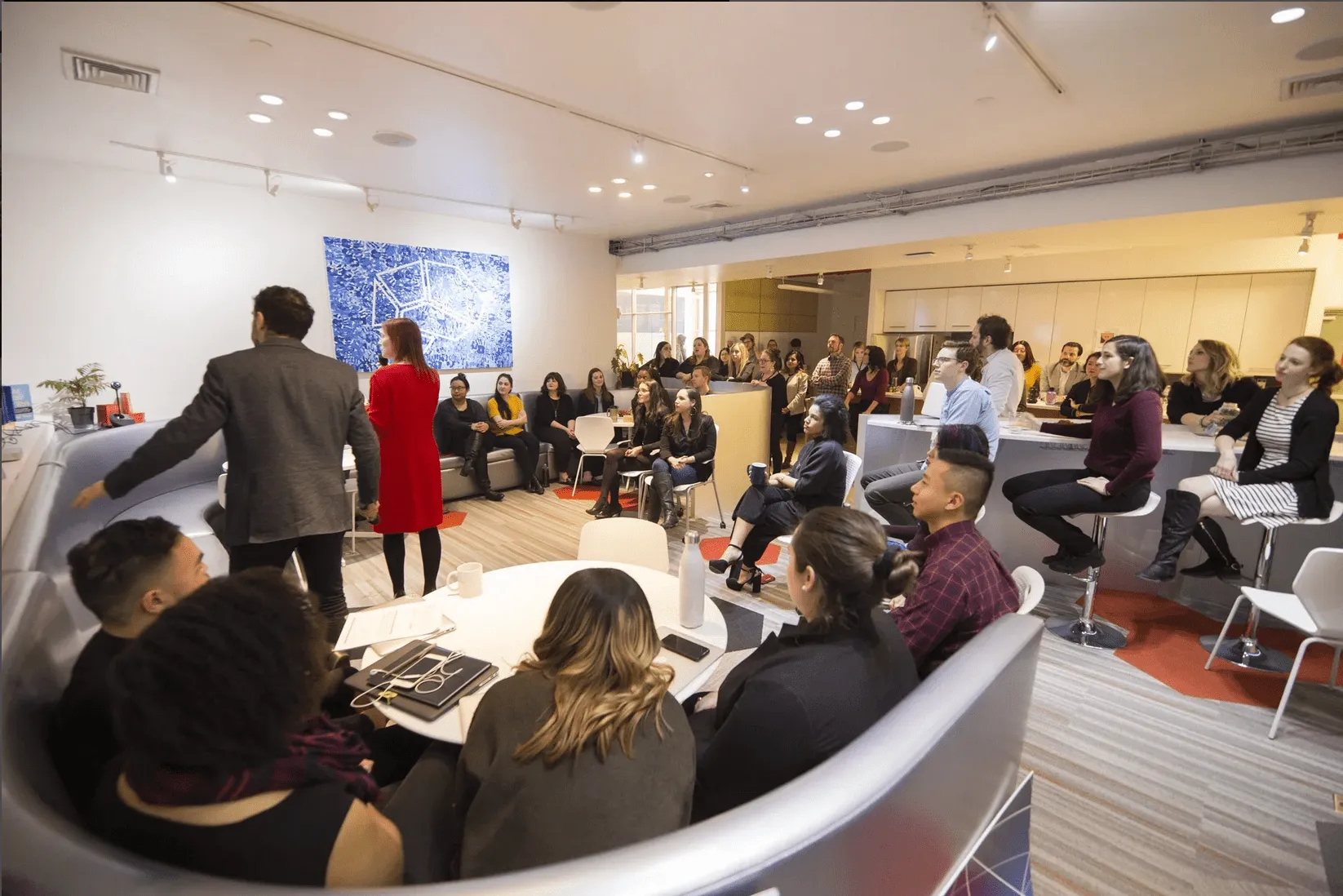
Following an insight-rich Day 1 of the 2026 NeuroLeadership Summit: Shape What’s Next, Day 2 extended the discussion of AI’s implications at work into what organizations can focus on going forward.
From the importance of moving beyond emotional intelligence to develop neurointelligence—that is, a thorough understanding of the brain—to using AI coaches like NILES to spark insights and improve performance, Day 2 of this year’s Summit has offered a wealth of brain-friendly next steps for leaders.
Below we’ve collected three big ideas from Day 2 to move you from a place of AI uncertainty to AI empowerment, so you and your teams can continue to shape what’s next.
The AI Transformation Is Actually a People Transformation
Earlier this year, Gartner estimated the global spend on AI would reach $2.5 trillion, a 44% increase from the year prior. Already, overall tech spend has surpassed $6 trillion. Clearly, the world seems engulfed in a technological revolution.
However, as panelists observed in Day 2’s opening keynote session, “The (Increasing) Role of Culture Today,” the influx of AI spending will only accelerate what an organization is already doing. Meaning, the transformation we think is technological in nature is actually happening across human workforces. That is where investments are best served.
“How do we make it safe? How do we apply judgment? Let’s take a step back and make sure the culture is ready for some of these pieces,” said Samantha Hammock, EVP and Chief Human Resources Officer at Cencora.
In practice, that means rolling out training initiatives that make learning stick—by harnessing people’s attention, having them generate insights around the lessons, having emotions during the learning, and spacing the lessons out (aka the AGES Model™.)
It also means establishing clear priorities and embedding the right habits, as JPMorganChase has done in the creation of its leadership principles, in partnership with NLI. Allison Horn, Head of Talent at JPMC, said the firm’s three principles—Earn Trust, Improve Relentlessly, and Do the Right Thing—orient the culture around what matters most. As the firm invests into AI, these human-first principles guide business and culture strategy, not the other way around.
Beware AI-Induced Blind Spots
Much has been written about AI’s sycophantic tendencies. Because the models are trained to be likable and flattering, and the companies making them want people to use them more frequently, AI agents tend to reward ideas that many humans wouldn’t support.
One study, in fact, found AI to be roughly 50% more sycophantic than humans in response to the same prompts, even when they involved unethical or illegal behavior.
What’s been less discussed so far is the cumulative effect AI has on our perception of our own biases. In the From the Lab session “The Neuroscience of AI in the Workplace,” Jay Van Bavel, Ph.D., Professor of Psychology and Neural Sciences at New York University, presented research showing that AI’s warmth and sycophancy leads us to become overconfident and enjoy the experience more. In turn, we lose sight of our potential biases and care less about them.
This is a big problem for teamwide AI use because it reduces the group’s collective intelligence. As Dr. Van Bavel pointed out, “groups get smarter when we draw from a lot of different perspectives.” If most people are getting their information from AI, the diversity of sources collapses. What we end up with is a kind of groupthink by proxy: AIs talking to other AIs through the intermediary of human users.
One quick fix: Change the default settings in your preferred AI platform to make it less warm, and instruct it to challenge your ideas with reasoned criticism and evidence—without all the needless sycophancy.
The Importance of Disciplined Hope
In the Summit’s closing keynote, “Shape What’s Next,” panelists explored the role of hope at a time when many leaders and employees are despairing about the future. Bob Johansen, Distinguished Fellow at Institute for the Future, said that while hope alone isn’t a strategy, “a discipline of hope can be a strategy.”
In practice, that means forming new behaviors that keep teams in a positive, toward state to bring the faraway future into clearer focus. Rachel Cardero, VP of Consulting and Product at NLI, echoed the sentiment by observing how the brain finds it difficult to create a vision for the future because it’s so effortful. At work, hope helps us form a vision for the kind of organization we want to create.
AI enters the picture as it pertains to becoming a helpful or harmful force in uplifting cultures. Effective use—staying metacognitive, building AI fluency, stretching one’s thinking—can lift teams’ abilities to get unstuck and experience greater agency around driving the desired results.
While hope may not be a strategy, with the right brain-friendly habits—and smart assistance from AI—teams can reap all the cultural and performance benefits of becoming hopeful.

.jpg)