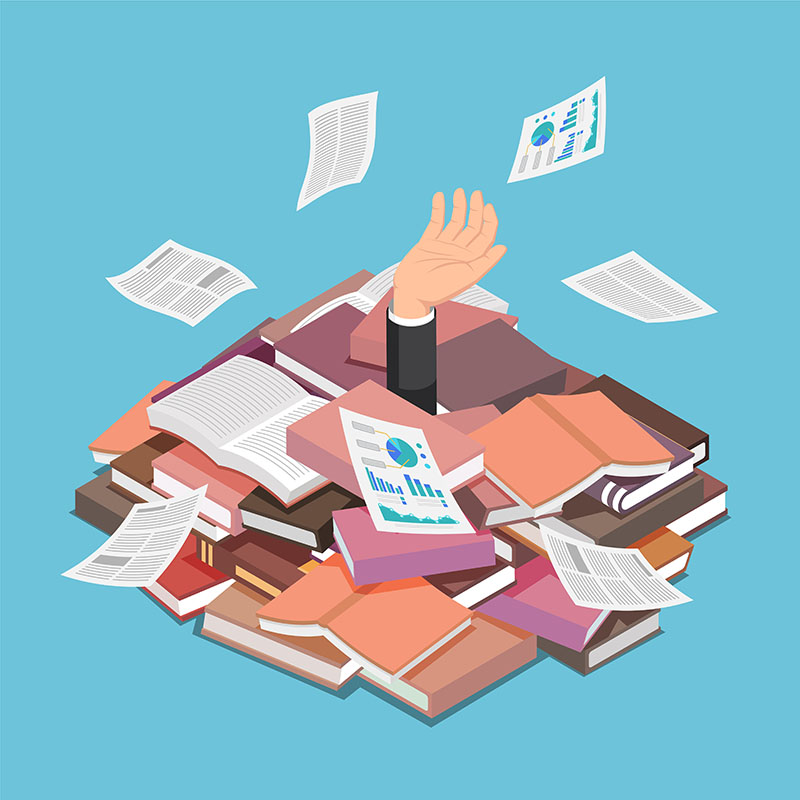
Artificial intelligence is far from the manager’s best friend — at least in terms of its current use cases. Reports show organizations’ heavy investments in AI over the past few years have raised expectations for what teams should be able to accomplish, but more often the result is “brain fry” (due to over-tasking) and an influx of “workslop” — that is, AI-generated reports, slide decks, and other materials that require heavy reworking.
The result: Managers are maxed out.
From a brain science perspective, bosses are feeling the limits of their cognitive capacity, which is the brain’s natural ceiling for juggling multiple tasks and issues at once. We can only hold so much in mind before things begin to slip (including our sanity), so any AI strategy must respect the limits of humans’ cognitive capacity.
Often, this means doing the opposite of what makes AI so tantalizing. Instead of moving quickly, as AI encourages, it means slowing down. Instead of using AI’s faster processing to work longer hours, it means clarifying what’s enough. And, perhaps most importantly, instead of offloading work to AI, it means putting AI into an assistive role so we can pay even closer attention to our work.
One framework managers can use to free up space in their cognitive capacity is the Healthy Mind Platter (HMP). Co-created by NLI CEO and Co-Founder Dr. David Rock and Dr. Dan Siegel, Founder and Director of Education of the Mindsight Institute, the HMP consists of seven essential daily mental activities for overall cognitive well-being.
They include:
- Focus time - taking on challenges in a goal-oriented way
- Play time - allowing ourselves to be spontaneous and creative
- Connecting time - richly socializing with those close to us
- Physical time - moving our bodies to strengthen the brain’s connections
- Time in - quiet, internal reflection to promote mindfulness
- Down time - recharging through mind-wandering, without any specific goal
- Sleep time - giving the brain rest to recover and consolidate memory
Managers who have been tasked to use AI within their teams can use the HMP as an orienting guide. All humans require these seven elements throughout their day, managers included. If team members or managers themselves are working through tasks without proper focus, time in, or down time, they will reach their cognitive capacity much sooner. However, serving the seven activities in the HMP helps us expand our cognitive capacity to take on daily tasks in a sustainable way.
The move to follow a brain-friendly relationship with AI is, in fact, part of a larger push we recommend within organizations to become more “neurointelligent,” or smarter about the brain. When we learn about the brain, research shows it actually makes us more effective in our jobs, promotes greater self-belief, and makes us more resilient to setbacks.
Managers can also help themselves by promoting more of the habits we see in so-called “AI fluent” populations. These are people who use AI to make themselves smarter. They make hard thinking easier. They do not give AI their work tasks to complete on their behalf. The key skill here is metacognition, or thinking about thinking. When we interrogate and challenge our own thoughts, and when we ask AI to help us do the same, we arrive at better solutions than if we just go with what first comes to mind.
When managers are maxed out, they lose the ability to show up as leaders. That means team members get off track, burn out more quickly, and, in our current era, likely default to unhelpful AI use more often. However, when managers find ways to support their own cognitive capacity, and promote smarter AI use in their teams, they help themselves on two fronts.
A manager who has protected their cognitive capacity is someone who can create a healthy and productive culture that trades workslop and teamwide burnout for high-quality results and sustainable performance — which represents a win for the individual, the team, and the organization as a whole.



.jpg)